
How to Explore Mexico City Safely on Your Own (Without a Tour Guide)
The number one question we get about Mexico City is some version of: “Is it actually safe to explore on my own?” It comes in different forms. “Do I need a tour guide in Mexico City?”, “Is CDMX dangerous for tourists?”, “My friends say I shouldn’t go without a local.” But it’s always the same underlying anxiety.
Here’s the honest answer: Mexico City is one of the most visited cities in the Western Hemisphere, and millions of independent travelers explore it every year without incident. You do not need a tour guide to stay safe. What you need is the same basic urban awareness you’d bring to New York, London, or Chicago, along with a clear sense of which neighborhoods are which.
This guide gives you both.
The Short Answer
Yes, you can explore Mexico City safely without a tour guide.
CDMX is a massive, modern metropolis of 22 million people. It has an extensive Metro system, affordable Uber and DiDi coverage across the entire city, bilingual signage at major museums and attractions, and well-established tourist neighborhoods with genuine hospitality infrastructure. In the areas tourists actually visit, you’re not navigating anything more challenging than any other major world capital.
The U.S. State Department rates Mexico City at Level 2: “Exercise Increased Caution.” That’s the same level as France, the United Kingdom, Germany, and the Bahamas. It’s one step above the baseline. The main risk flagged is petty crime, specifically pickpocketing and phone theft, not violent crime targeting tourists.
Mexico City welcomes tens of millions of visitors each year. The gap between the city’s global reputation and the reality that visitors experience on the ground is significant. Most first-time visitors arrive nervous and leave wondering what they were worried about.
That said: like any city of this size, Mexico City requires basic awareness. Some neighborhoods are genuinely not appropriate for tourists to wander through. Night and day dynamics are different. This guide will tell you exactly what you need to know.
Neighborhood-by-Neighborhood Safety Breakdown
Not all of Mexico City is the same. The tourist neighborhoods, the ones you’ll actually spend your time in, are safe, well-maintained, and increasingly well-policed. Here’s an honest breakdown.
Polanco: Very Safe
Polanco is consistently ranked among the top three safest neighborhoods in Mexico City. It’s home to international embassies (the new U.S. Embassy opened in Nuevo Polanco in 2025), luxury hotels, and corporate headquarters. That concentration of international business means well-lit streets, regular police patrols, and steady foot traffic throughout the day and late into the evening.
For first-time visitors to CDMX, Polanco is often the ideal starting point precisely because it’s easy to feel comfortable there. The main streets, including Masaryk, Campos Elíseos, and the areas around Parque Lincoln and Plaza Carso, are as safe as any upscale neighborhood in any world capital.
What’s here: Museo Soumaya (free), Museo Jumex (free), Parque Lincoln, Avenida Presidente Masaryk, world-class restaurants ranging from $6 taco stands to two-Michelin-star dining. For a complete walking route and food recommendations, see our first-timer’s guide to Polanco. For detailed safety data and comparison tables, see Is Polanco Safe?.
Roma Norte / Roma Sur: Very Safe
Roma is the hip, creative heart of modern Mexico City. Tree-lined boulevards, independent coffee shops, art galleries, natural wine bars, and excellent street food. It’s where the city’s creative class lives and plays, and it shows. The sidewalks are busy, the vibes are relaxed, and there’s genuine life at street level throughout the day.
Roma Norte is the more active of the two, with higher foot traffic and more commercial activity. Roma Sur is slightly quieter and more residential. Both are safe for tourists.
Note: Roma has a more active nightlife than Polanco, which means more late-night activity and slightly more late-night risk. Standard awareness applies: use Uber after midnight, don’t walk alone on very quiet residential streets at 2 AM.
What’s here: Parque México, Mercado Medellín, Álvaro Obregón avenue, dozens of excellent restaurants and cafes.
Condesa: Very Safe
Condesa is Roma’s slightly calmer neighbor, with more parks, more European-style architecture, and a bit more residential feel. The neighborhood was built in the 1920s-40s on a former horse racing track, which is why several streets curve in distinctive arcs around the now-defunct track footprint.
Art Deco architecture, tree-canopied streets, excellent brunch spots, and strong walkability make Condesa a favorite for visitors who want a neighborhood feel rather than a tourist-dense experience. Parque México and Parque España are genuine gathering places for locals.
What’s here: Parque México, Parque España, Avenida Amsterdam (a circular boulevard great for jogging or walking), excellent independent restaurants.
Centro Histórico: Safe During the Day
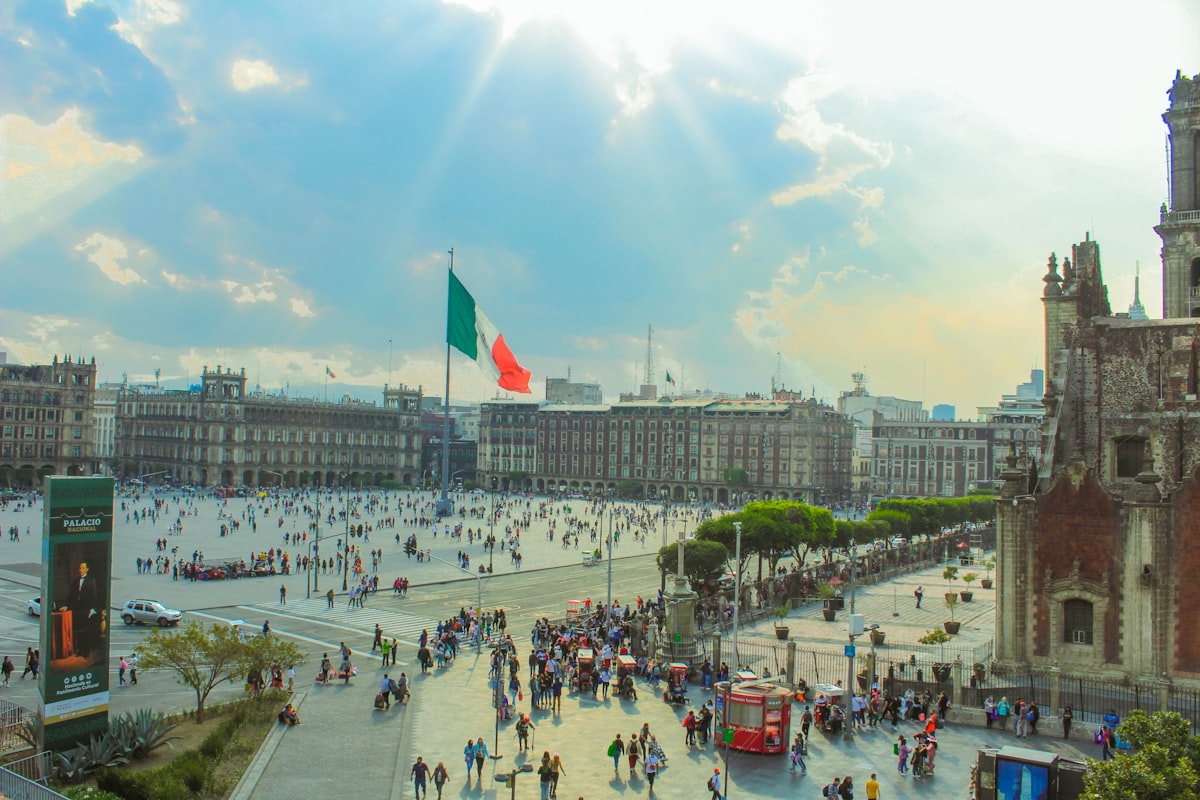
The historic center is where Mexico City began. Aztec Tenochtitlán stood here before the Spanish razed it and built their colonial capital on top. The main attractions are genuinely spectacular: the Zócalo (one of the largest public squares in the world), the Metropolitan Cathedral, the Palacio de Bellas Artes, the Museo del Templo Mayor, and miles of pedestrian shopping streets.
During the day, the main pedestrian streets and plazas are busy and safe. The area around Zócalo, Madero street, and Bellas Artes gets substantial tourist traffic, and there’s a real police presence on the main corridors.
Where to exercise more caution: After dark, Centro becomes more variable. The main plazas and restaurants stay active and relatively safe, but side streets can become quieter and less well-lit. Pickpocketing risk is higher in crowded areas: markets, Metro stations, and crowded plazas. Keep your phone in a front pocket and use a crossbody bag rather than a backpack.
What’s here: Zócalo, Metropolitan Cathedral, Palacio de Bellas Artes, Museo del Templo Mayor, Eje Central, Mercado de San Juan.
Coyoacán: Safe
Coyoacán is a colonial neighborhood in the south of the city with a distinct university-town atmosphere: cobblestone streets, colorful buildings, plazas with outdoor cafes, and some of the most important cultural sites in Mexico. It’s where Frida Kahlo was born and lived, and the Casa Azul (Frida Kahlo Museum) is one of the most visited museums in the country.
The vibe is relaxed and local. Coyoacán doesn’t feel like a tourist neighborhood. It feels like a real neighborhood that happens to have excellent things to see. The weekend market in the central plaza is a highlight.
What’s here: Museo Frida Kahlo (book tickets in advance because they sell out), Jardín del Centenario, Mercado de Coyoacán, Plaza Hidalgo, excellent helado at the market.
Chapultepec: Safe
Chapultepec is Mexico City’s Central Park, but bigger, covering over 700 hectares spread across three sections. The park contains two lakes, a zoo, multiple museums, an amusement park, a forest, and the Castillo de Chapultepec (the only castle on mainland North America to have been used as a royal residence).
The park is extremely well-used by locals and visitors alike, which means active and safe, particularly in Section 1, which is closest to Polanco and contains the main museums and castle. Weekends are especially lively.
What’s here: Castillo de Chapultepec, Museo Nacional de Antropología (one of the best museums in Latin America), Museo de Arte Moderno, zoo (free), lakeside rowing.
Areas to Avoid as a Tourist
Be specific here: Tepito, large parts of Iztapalapa, and Doctores at night are neighborhoods that tourists have no reason to visit and that carry genuine risk. These areas have nothing against the tourist attractions in other neighborhoods. They’re simply not part of the tourist circuit, have high crime rates by Mexico City standards, and lack the infrastructure and security presence of the visitor neighborhoods.
This isn’t alarmism. It’s the same advice you’d give someone visiting any major city. You don’t need to visit every part of the city. Stick to the neighborhoods listed above and you’ll have a full, rich trip with nothing to worry about.
When You Should Consider a Guide
Let’s be honest: there are situations where a guide genuinely adds value. Pretending otherwise would do you a disservice.
Day trips to Teotihuacán. The pyramids themselves are spectacular and easy to navigate independently. But a knowledgeable guide makes a significant difference at an archaeological site of this scale, explaining the cosmological significance of the layout, pointing out details you’d miss, and giving you context that transforms a pile of ancient stones into one of the most remarkable places in human history. If Teotihuacán is on your list, a guided tour is worth the cost.
If you don’t speak any Spanish and feel genuinely uncomfortable. Most tourist neighborhoods have enough English coverage that you’ll manage fine. But if you’re arriving with zero Spanish and the thought of navigating independently makes you anxious, a guide will reduce that stress. That’s a legitimate reason.
Market tours where local navigation helps. Mercado de San Juan, the Mercado de Artesanías, and the sprawling Mercado Jamaica are rewarding to explore independently, but a local guide who knows the vendors, can translate, and can tell you what you’re actually looking at will dramatically improve the experience.
Night tours in unfamiliar neighborhoods. Evening food tours, nightlife-focused experiences, and after-dark visits to neighborhoods you don’t know well are all better with a local leading the way. Not because they’re dangerous, but because a guide opens doors, literally and figuratively, that you won’t find on your own.
When Self-Guided Is the Way to Go
For the majority of what most tourists want to do in Mexico City, you don’t need a guide. Here’s when going independent is clearly the right call.
Walking the main tourist neighborhoods. Polanco, Roma, Condesa, and the main corridors of Centro Histórico are all straightforward to navigate independently. The streets are logical, the main attractions are well-signposted, and you’ll find plenty of other visitors around. There’s no guide advantage here that justifies the cost.
Museum hopping. Mexico City’s major museums, including Soumaya, Jumex, the Museo Nacional de Antropología, Bellas Artes, and Museo Frida Kahlo, all have bilingual signage, English-language audio guides (often included), and clear exhibit layouts. You do not need a human guide to appreciate them.
Food exploration. Street food stalls, taquerías, fondas, markets, and restaurants are meant to be stumbled into. Some of the best meals in Mexico City are the ones you find because you turned down a random street and smelled something incredible. A guide’s curated list is no substitute for wandering with hunger.
Group travel without per-person fees. Guide tours in Mexico City typically charge per person. If you’re traveling with a group of four, six, or eight people, per-person guide fees add up fast. Self-guided options that charge a flat fee for a group can cut costs dramatically while preserving the experience.
Practical Safety Tips
Ten concrete things that will materially improve your experience and reduce risk.
1. Use Uber or DiDi exclusively. Never hail street taxis. This is the single most important safety rule in Mexico City. Street taxis in CDMX carry real risk, from price gouging to more serious incidents. Uber and DiDi are GPS-tracked, the driver is identified by the app, and they’re genuinely inexpensive. The convenience is the same; the safety difference is significant.
2. Stay in tourist neighborhoods your first day. Get your bearings in Polanco, Roma, or Condesa before venturing further. Your first day in any unfamiliar city is when you’re most disoriented and most likely to make navigational mistakes.
3. Keep your phone in your front pocket; use a crossbody bag. Back pockets and backpacks are easy pickpocket targets. A crossbody bag worn in front is substantially more secure. This applies everywhere: Metro, crowded plazas, markets.
4. Drink bottled water. This isn’t a safety concern in the crime sense, but it will ruin your trip if you ignore it. Mexico City’s tap water is not safe to drink for most visitors. Bottled water is available everywhere, typically for 10-20 pesos. Restaurants use purified water and ice, so you don’t need to worry about drinks or ice at sit-down restaurants.
5. Learn 10 basic Spanish phrases. You’ll manage without Spanish in the main tourist neighborhoods, but even minimal effort is received with warmth and goodwill. Know: “¿Cuánto cuesta?” (How much?), “Una mesa para dos” (A table for two), “La cuenta, por favor” (The check, please), “¿Dónde está…?” (Where is…?), and “No entiendo” (I don’t understand). A phrasebook or a few hours with Duolingo before you leave will pay dividends.
6. Download offline maps before you go. Google Maps and Maps.me both support offline downloads. Download the Mexico City map before you board your flight. This means you have full navigation capability even if your phone data fails, your roaming plan has gaps, or you want to save data. This is just good travel practice anywhere.
7. Use ATMs inside banks or shopping malls, never standalone street ATMs. Standalone ATMs are more vulnerable to skimming devices. ATMs inside a bank branch or inside a shopping mall like Antara or Perisur are significantly safer. Always cover the keypad when entering your PIN.
8. Don’t flash expensive jewelry, watches, or cameras in crowded areas. In Polanco’s restaurants you’ll be fine. On the Metro, in markets, or in crowded Centro plazas, be more discreet. This is the same advice you’d get for any major urban environment.
9. Walk with confidence and look like you know where you’re going. This is general urban wisdom, but it’s worth stating. People who appear lost or disoriented attract more attention than people who move with purpose. If you need to check your map, step into a cafe or a store rather than stopping in the middle of the sidewalk.
10. Have your hotel’s address saved in your phone, in Spanish. Not just the name. The full address, written as it would appear on a map or a Uber form. If you get disoriented or your data cuts out, you can show it to any taxi, rideshare, or passerby and get directed home.
A Structured Self-Guided Option
Here’s the honest version of where Tour in a Box fits into this conversation: our Mexico City tour is designed specifically for the “I want structure without a guide” situation.
The tour takes you through 10 curated stops in Polanco, a neighborhood we chose because it’s safe, walkable, and genuinely interesting. The narrative is built around an Aztec treasure mystery: “Find Montezuma’s Lost Treasure.” Each stop gives you a reason to look at the location, engage with it, and understand its context. You’re not just walking between points on a map. Each stop has a challenge that asks you to observe something specific, solve something, or find something hidden in plain sight.
It works entirely offline. Download it before you leave, open it on your phone, and play. No data plan needed, no Wi-Fi required. One purchase covers your entire group, which makes it significantly cheaper than per-person guided tours. And you go at your own pace, stop for food when you’re hungry, linger at the museum as long as you want.
It’s not a substitute for the kind of deep local knowledge a great guide brings. What it is: a planned route through safe, curated stops, with enough structure to keep a group moving and engaged, at a fraction of the cost of a human guide.
Frequently Asked Questions
Is Mexico City safe for solo travelers?
Yes, particularly in the tourist neighborhoods. Solo travelers do need to be slightly more aware than groups since there’s no safety-in-numbers effect, but millions of solo visitors move through CDMX every year without issue. Use Uber, stay in well-trafficked areas, and apply standard urban awareness. Solo female travelers report mixed experiences: Polanco, Roma, and Condesa are generally comfortable; elsewhere you may encounter more unwanted attention. The same practical precautions apply.
Do I need to speak Spanish to get around Mexico City?
No, not in the main tourist neighborhoods. English is widely spoken in Polanco hotels, restaurants, and shops. Major museums have bilingual signage and often English audio guides. Uber operates in English. But some Spanish, even just the basics, will meaningfully improve your experience and open up more authentic interactions. It’s worth the minor effort.
Is the Mexico City Metro safe for tourists?
The Metro is safe during normal hours on most lines and is genuinely excellent transit infrastructure. The main risk is petty theft, specifically pickpocketing in crowded cars during rush hour. Keep your phone in a front pocket, avoid rush hour (7-9 AM, 5-7 PM) with expensive electronics or luggage, and you’ll be fine. For short trips where you’d be carrying bags or valuables, Uber is the easier call.
What’s the best neighborhood to base yourself in for a first trip?
Polanco, Roma Norte, or Condesa. All three are safe, walkable, and have excellent restaurants and transport access. Polanco is the safest and most immediately comfortable for first-timers but slightly more expensive. Roma and Condesa have more of a local, neighborhood feel and are slightly more budget-friendly. All three are within easy Uber distance of the rest of the city.
Should I be worried about altitude sickness in Mexico City?
Worth knowing about. Mexico City sits at 2,240 meters (7,350 feet), roughly the altitude of Denver, Colorado. Some visitors experience mild symptoms their first day: shortness of breath, light headache, fatigue. These usually resolve within 24-48 hours. Stay hydrated, take it easy on your first day, and avoid heavy alcohol consumption the night you arrive. It’s not a reason to avoid the city; it’s just a reason to pace yourself on arrival.
Is it safe to eat street food in Mexico City?
Yes. CDMX is one of the great street food cities in the world, and eating from taquerías and street stalls is a central part of the experience. Choose stalls with high turnover (fresh food, lots of customers) and use common sense about cleanliness. The main precaution is the water: avoid raw salads from unknown sources and make sure your meat is fully cooked. Fruit with edible peels is fine. This is the same advice for any major Latin American city.
Mexico City does not require a tour guide. It requires the same thing every major city requires: basic awareness, a bit of preparation, and the confidence to engage with a place that rewards genuine curiosity.
The neighborhoods tourists visit are safe. The food is exceptional. The museums are world-class. The transit is functional. And the city has more depth, history, and personality than almost anywhere else on earth.
The main thing standing between most first-time visitors and a great trip to CDMX is the fear itself. Address that, and everything else follows.
Ready to explore on your own? Our Mexico City scavenger hunt tour gives you a structured route through Polanco’s best stops, with challenges, stories, and navigation built in. One price for your whole group. Works offline. No guide required.
Explore Mexico City yourself
Interactive scavenger hunt tour. Solve riddles, discover history, find local gems.
See the Mexico City Tour