
A First-Timer's Guide to Polanco, Mexico City
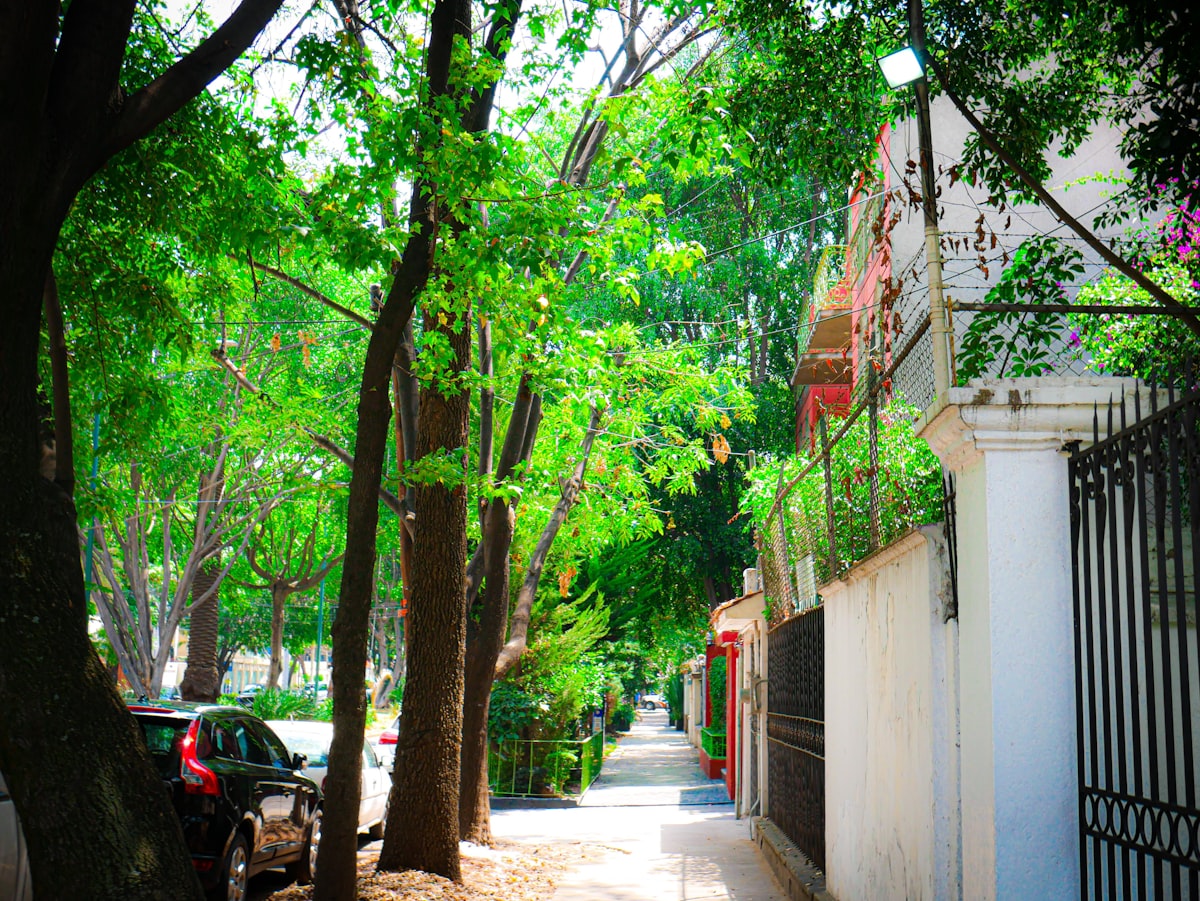
Polanco is where most first-time Mexico City visitors feel instantly comfortable. The streets are clean, tree-lined, and walkable. Two of the country’s best museums are free. The food ranges from $6 taco stands to two-Michelin-star tasting menus. And it’s consistently ranked as one of the safest neighborhoods in the entire city.
Here’s everything you need to know before you go.
What Is Polanco?
Polanco is an upscale neighborhood in the western part of Mexico City, often called the “Beverly Hills of Mexico.” It’s split into two distinct areas:
Traditional Polanco (south of Avenida Ejército Nacional) — The original 1940s residential neighborhood. Tree-lined streets named after writers (Oscar Wilde, Julio Verne, Lafontaine), charming “Colonial Californiano” architecture, Parque Lincoln, and the luxury shopping strip along Avenida Presidente Masaryk.
Nuevo Polanco (north of Ejército Nacional) — Formerly warehouses and factories, now one of CDMX’s fastest-developing areas. Anchored by Plaza Carso, the mixed-use mega-development that houses Museo Soumaya, Museo Jumex, restaurants, and a cinema.
You can walk between the two in 10 minutes.
Is Polanco Safe?
Yes. Polanco is consistently ranked among the top 3 safest neighborhoods in Mexico City. The concentration of international businesses, embassies, and luxury hotels means a constant security presence — well-lit streets, regular police patrols, and steady foot traffic late into the night.
Compared to other popular visitor neighborhoods (Roma, Condesa, Centro Histórico), Polanco is notably safer by most metrics. The U.S. State Department rates Mexico City overall at Level 2 (“Exercise Increased Caution”), with the main risk being petty crime like pickpocketing on public transit.
Practical advice: Use normal travel awareness. Don’t flash expensive electronics. Walk in groups after midnight. But during the day, Polanco is one of the most relaxed places to walk around in all of Mexico City.
The Must-See Landmarks
Museo Soumaya
The building alone is worth the visit — 46 meters tall, six stories, covered in 16,000 hexagonal aluminum tiles. Designed by Fernando Romero and engineered with Frank Gehry. Cost $70 million to build.
Inside: approximately 66,000 works spanning Pre-Hispanic sculpture to 20th-century Mexican art to European old masters. The highlight is the largest collection of Auguste Rodin casts outside France — 380 works, including “The Thinker” in the lobby.
Admission: Free. No reservation needed. Tip: Visit on a weekday. The free admission draws long weekend queues.
Museo Jumex
Right next door to Soumaya. Designed by David Chipperfield, the building houses around 2,800 works of contemporary art — Damien Hirst, Andy Warhol, Gabriel Orozco. Founded by Eugenio López Alonso (heir to the Jumex juice fortune).
Admission: Free. No reservation needed. Hours: Closed Mondays. Tue-Fri 10:00-17:00, Sat 10:00-19:00, Sun 10:00-17:00. Note: No permanent exhibitions — displays rotate. Check fundacionjumex.org before visiting.
Parque Lincoln
The green heart of traditional Polanco. Built during the neighborhood’s 1940s housing boom, the park features:
- An aviary with peacocks and Australian parakeets (8 pesos entry, Tue-Sun 10:00-17:00)
- Reflecting pools where enthusiasts gather for remote-controlled boat racing on weekends (rent one for 100 pesos/15 minutes)
- Bronze statues of Abraham Lincoln (gifted by Lyndon B. Johnson in the 1960s) and Martin Luther King Jr.
- A clock tower that serves as the icon for the Polanco metro station
Avenida Presidente Masaryk
The most expensive street in Mexico. Often compared to Fifth Avenue or the Champs-Élysées. Wide sidewalks, manicured trees, and flagships from Louis Vuitton, Chanel, Gucci, Hermès, Cartier, and dozens more.
Even if luxury shopping isn’t your thing, the boulevard is beautiful to walk along — especially in the late afternoon when the light comes through the trees.
Where to Eat
The $6 Taco Stand
El Turix (Emilio Castelar 212) — This is the essential Polanco taco stop. It serves exclusively cochinita pibil — Yucatecan slow-braised pork. Options: taco, torta, panucho, or tamal. No tables — you eat standing. Beer from the bottle. Cash only. About 111 pesos (~$6 USD) for three items. An absurd value for a Polanco zip code.
Casual and Mid-Range
Adonis — A Lebanese institution that opened in 1974. Arched doorways, traditional art, even a small aquarium inside. Polanco has a significant Lebanese-Mexican community, and Adonis is its culinary anchor.
Churrería El Moro — Arguably the best churros in Mexico City. Great for a walking snack or afternoon treat.
Bellopuerto — Specializes in shrimp and octopus dishes. The Polanco location is a local favorite for casual seafood.
Fine Dining
Pujol (Chef Enrique Olvera) — Two Michelin stars. The signature mole madre — a layered mole aged over 1,000 days alongside a fresh mole — is one of the most celebrated dishes in Mexico. Regularly on the World’s 50 Best list. Reserve well in advance.
Quintonil (Chef Jorge Vallejo) — Two Michelin stars. More formal and intimate than Pujol. Known for dishes that elevate indigenous Mexican ingredients.
Entremar (Chef Gabriela Cámara) — The white-tablecloth sister restaurant to the legendary Contramar in Roma. The tuna tostadas are the headliner.
A Half-Day Walking Route
Polanco is flat, has wide sidewalks, and is one of the most walkable neighborhoods in Mexico City. Here’s a route that covers the highlights in 3-4 hours:
- Start at Museo Soumaya in Nuevo Polanco (free, 1-2 hours)
- Walk next door to Museo Jumex (free, 1 hour)
- Grab a coffee at Plaza Carso
- Walk south across Ejército Nacional into traditional Polanco
- Stroll down Calle Julio Verne or Calle Oscar Wilde — tree-lined residential streets with boutiques and galleries
- Arrive at Parque Lincoln — visit the aviary, watch the RC boats
- Walk east along Avenida Presidente Masaryk — window-shop or just enjoy the boulevard
- Detour to El Turix for cochinita pibil tacos
- Continue south to Campos Elíseos avenue (hotels, embassies, quieter luxury feel)
- End at Auditorio metro station — or continue into Chapultepec Park if you want to extend the day
Getting to Polanco
From the Airport (MEX)
Uber/Didi (recommended): 150-350 MXN ($8-20 USD), 18-40 minutes depending on traffic. Note: rideshare pickups are at designated spots outside the terminal, not at the curb.
Official airport taxi: ~$25-30 USD. Buy a prepaid voucher at the taxi kiosks inside the terminal.
Metro (cheapest): 5 pesos ($0.25 USD). Take Line 5 from Terminal Aérea, transfer at La Raza to Line 7, ride to Polanco station. About 40 minutes total. Not ideal with heavy luggage.
Metro Stations
- Polanco (Line 7) — Central Polanco, near Parque Lincoln
- Auditorio (Line 7) — Southern edge, near Chapultepec Park
- San Joaquín (Line 7) — Northwestern edge, closer to Nuevo Polanco/Plaza Carso
Practical Tips
Best time to visit: October through May (dry season). February to April is ideal — 20-25°C (68-77°F), low humidity, minimal rain. Rainy season (late June through mid-October) brings afternoon downpours that usually pass within 1-2 hours.
How much time to spend: Half a day minimum for museums and a walking tour. A full day if you want to eat well, shop, and explore side streets. Two days if you combine with Chapultepec Park and the Museo Nacional de Antropología (which borders southern Polanco).
Altitude: Mexico City sits at 2,240 meters (7,350 ft). Some visitors feel mild altitude effects — shortness of breath, light headache. Stay hydrated and take it easy your first day.
Water: Don’t drink tap water. Bottled water is available everywhere.
Tipping: 15% is standard at restaurants, 20% for excellent service. Cash tips in pesos are preferred. Tipping is not expected at casual spots like El Turix, but leaving a few pesos in a tip jar is appreciated.
Language: English is widely spoken in Polanco’s hotels, upscale restaurants, and shops — more so than most other CDMX neighborhoods. But basic Spanish phrases are always appreciated.
Frequently Asked Questions
Is Polanco worth visiting if I’m on a budget? Absolutely. Both museums are free. Parque Lincoln is free. Walking the streets is free. El Turix tacos cost $6. You can have a full, rich day in Polanco for very little money.
Is Polanco walkable? Yes — it’s one of the most walkable neighborhoods in Mexico City. Flat terrain, wide sidewalks, well-maintained streets, and most attractions are within a 15-minute walk of each other.
Can I walk from Polanco to Chapultepec Park? Yes. The southern edge of Polanco (near Auditorio metro station) is right at the entrance to Chapultepec Park. The Museo Nacional de Antropología is a 5-minute walk from the Polanco border.
How does Polanco compare to Roma and Condesa? Roma and Condesa have more of a bohemian, artsy vibe — independent coffee shops, street art, mezcal bars. Polanco is more polished and upscale. All three are great, but Polanco feels safer and more immediately comfortable for first-time visitors.
Do I need to speak Spanish? Not in Polanco. Most service staff in hotels, restaurants, and shops speak English. But even a few phrases in Spanish will improve every interaction.
Explore Polanco like a local. Our Mexico City scavenger hunt tour takes you through 10 interactive stops in Polanco — solving riddles at landmarks, parks, and sculptures while discovering the neighborhood’s hidden stories. One purchase covers your whole group. Download it and play offline.
Explore Mexico City yourself
Interactive scavenger hunt tour. Solve riddles, discover history, find local gems.
See the Mexico City Tour